Operational Intelligence for the Modern Hospital

Using RTLS to improve efficiency, safety, and care delivery
Operational inefficiencies rarely announce themselves. They show up quietly in delayed discharges, staff overtime, equipment search time, compliance gaps, and more. Over time, those friction points compound and margins narrow. Clinical teams feel the strain.
For today’s hospital executives, operational excellence is no longer a departmental initiative. It is a system-wide mandate.
Real-Time Location Systems (RTLS) have evolved beyond simple asset tracking. Modern enterprise platforms provide real-time operational intelligence that supports throughput, safety, compliance, and executive decision-making across the continuum of care.
Increasingly, these platforms are delivered through cloud-based platforms. This approach allows hospitals to scale faster, deploy new sites more quickly, accelerate time to value, and receive major upgrades in minutes without adding IT burden.
Below, we explore how leading hospitals are using RTLS to drive measurable, scalable improvement without adding burden to clinical teams.
The hidden cost of operational blind spots
Hospitals are dynamic environments. When visibility is fragmented across siloed systems, leaders are forced to make decisions based on incomplete data.
That lack of operational clarity results in:
- Excess inventory purchases
- Delayed patient care due to equipment search time
- Inconsistent staff response to safety events
- Manual compliance tracking
- Reactive decision-making
Operational intelligence changes that equation. By providing continuous, real-time insight into assets, people, and environments, RTLS transforms blind spots into actionable data.
Improving asset availability and reducing workflow bottlenecks
For clinical staff, “hunt time” is more than an inconvenience. It disrupts care delivery and slows throughput.
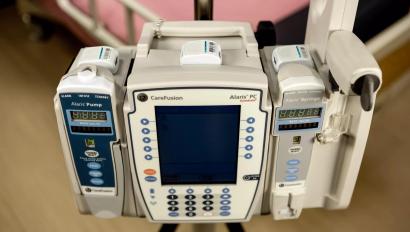
Critical mobile medical equipment like infusion pumps, specialty beds, wheelchairs, and telemetry monitors must be available at the right time and in the right condition. When it is not, nurses escalate. Units borrow. Departments over-order to compensate. Costs rise while confidence in inventory systems falls.
Enterprise RTLS asset management enables hospitals to:
- Locate equipment instantly across departments
- Track utilization patterns to right-size inventory
- Monitor cleaning and maintenance workflows
- Prevent hoarding and reducing buffer stock
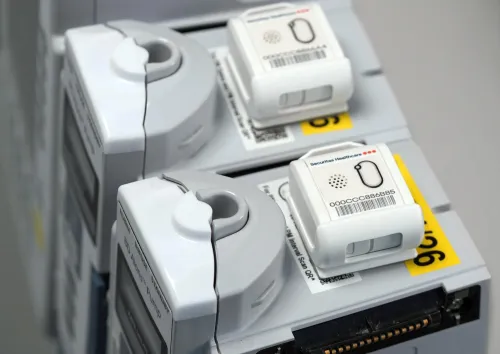
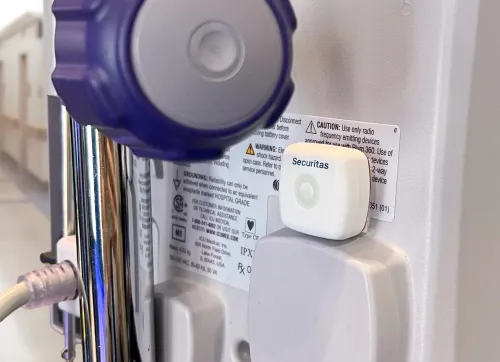
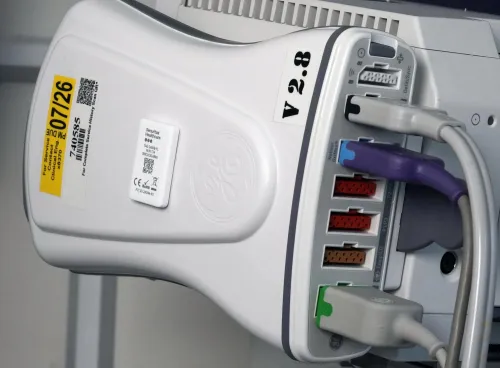
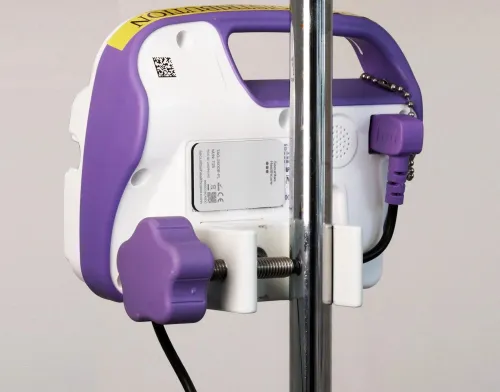
The result is measurable: fewer workflow interruptions, reduced capital spend, and improved patient flow.
When executives can see utilization data across the system, they can align procurement decisions with actual demand—not assumptions.
Ready to improve asset availability across your system? Learn more about enterprise RTLS solutions.
Enhancing staff safety with wearable duress technology
Workplace violence and staff safety remain critical concerns for hospital leadership. Response time matters, not only for physical safety, but also for workforce morale and retention.
Wearable mobile duress solutions provide discreet, immediate alerting when staff need assistance.
Integrated within a unified RTLS platform, these solutions enable:
- Real-time staff location visibility during an incident
- Automated escalation workflows
- Faster security response times
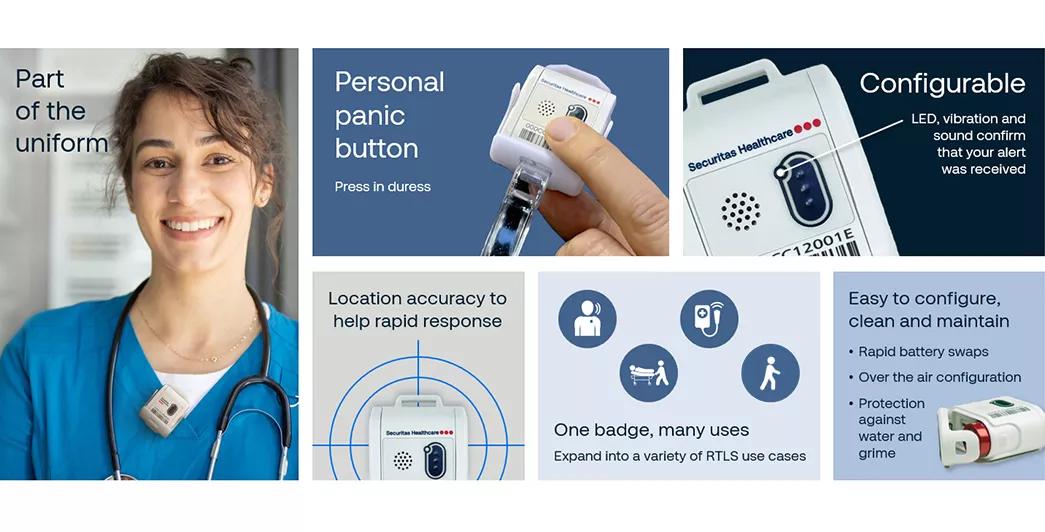
Solutions such as Hugs Infant Protection and Staff Protection operate on the same RTLS infrastructure, eliminating the need for separate systems while strengthening enterprise-wide safety protocols.
For executives, this is not simply a security enhancement. It is an operational safeguard that protects caregivers and reinforces a culture of safety.
Learn how portable duress technology can strengthen staff protection across your facilities.
Environmental Monitoring that protects uptime and compliance
Environmental fluctuations can quietly jeopardize patient safety and operational continuity, often without immediate visibility.
Temperature changes in medication storage areas can compromise drug efficacy and humidity instability in surgical suites can affect sterile conditions. Unnoticed environmental shifts can lead to equipment downtime. And reliance on manual logs can leave organizations exposed to compliance risk.
Automated environmental monitoring integrated within an RTLS platform provides continuous oversight of:
- Temperature-sensitive storage areas
- Laboratory environments
- Operating rooms and sterile processing
- Infrastructure conditions impacting critical assets
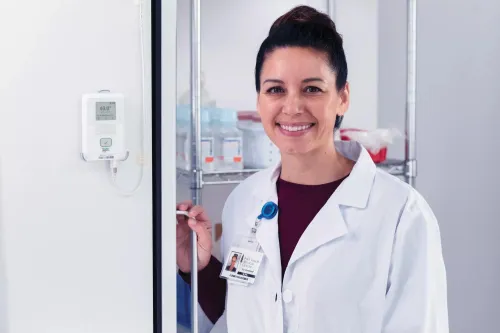
Automated alerts allow facilities and clinical teams to intervene before small issues become costly disruptions. At the executive level, real-time dashboards provide confidence that regulatory standards are consistently met.
Operational excellence requires reliability. Environmental intelligence protects it.
From real-time visibility to executive decision-making
Operational visibility is only valuable if it informs action.
Modern RTLS platforms aggregate data across asset movement, staff response times, environmental trends, and workflow performance. This creates a system-wide view of operational health.
Executives gain the ability to:
- Identify bottlenecks across facilities
- Compare utilization rates between departments
- Evaluate response time metrics for safety events
- Forecast equipment needs based on real usage data
- Support capital planning with objective analytics
Instead of relying on anecdotal reporting or periodic audits, leaders can make strategic decisions grounded in continuous operational insight.
This shift, from reactive problem-solving to proactive optimization, defines modern operational intelligence.
Designed for scalable, system-wide improvement
Hospitals do not operate as isolated units. Multi-site systems require technology that scales across campuses without increasing complexity. A cloud-based RTLS platform is designed for exactly this kind of growth. Adding another campus or building does not require new local servers; instead, capacity is adjusted in the cloud to meet demand. This reduces IT overhead and allows health systems to standardize governance, security, and workflows across every site.
A unified RTLS platform supports:
- Standardized governance and security protocols
- Enterprise-wide reporting and benchmarking
- Expansion from a single use case to multiple applications
- Consolidation of disparate tracking and safety systems
Rather than layering new tools onto an already complex IT ecosystem, hospitals can build on a single, resilient infrastructure that supports Asset Management, Staff Protection, Infant Protection, Environmental Monitoring, Staff Workflow (including Nurse Call cancellation) and Patient Flow together.
For executive leaders, this means scalability without fragmentation and measurable operational gains without added clinical burden.
Elevating operational excellence through intelligence
Operational inefficiencies may begin quietly, but their impact is cumulative. Throughput slows. Staff burnout increases. Financial performance tightens.
Enterprise RTLS brings clarity where there was uncertainty. It reduces waste. Strengthens safety. Protects compliance. And equips leaders with the data they need to drive meaningful improvement.
Hospitals that treat RTLS as operational infrastructure (not a standalone application) position themselves for sustained performance in an increasingly complex healthcare landscape.
Learn more about how Securitas Healthcare helps hospitals and IDNs turn real-time data into operational excellence.